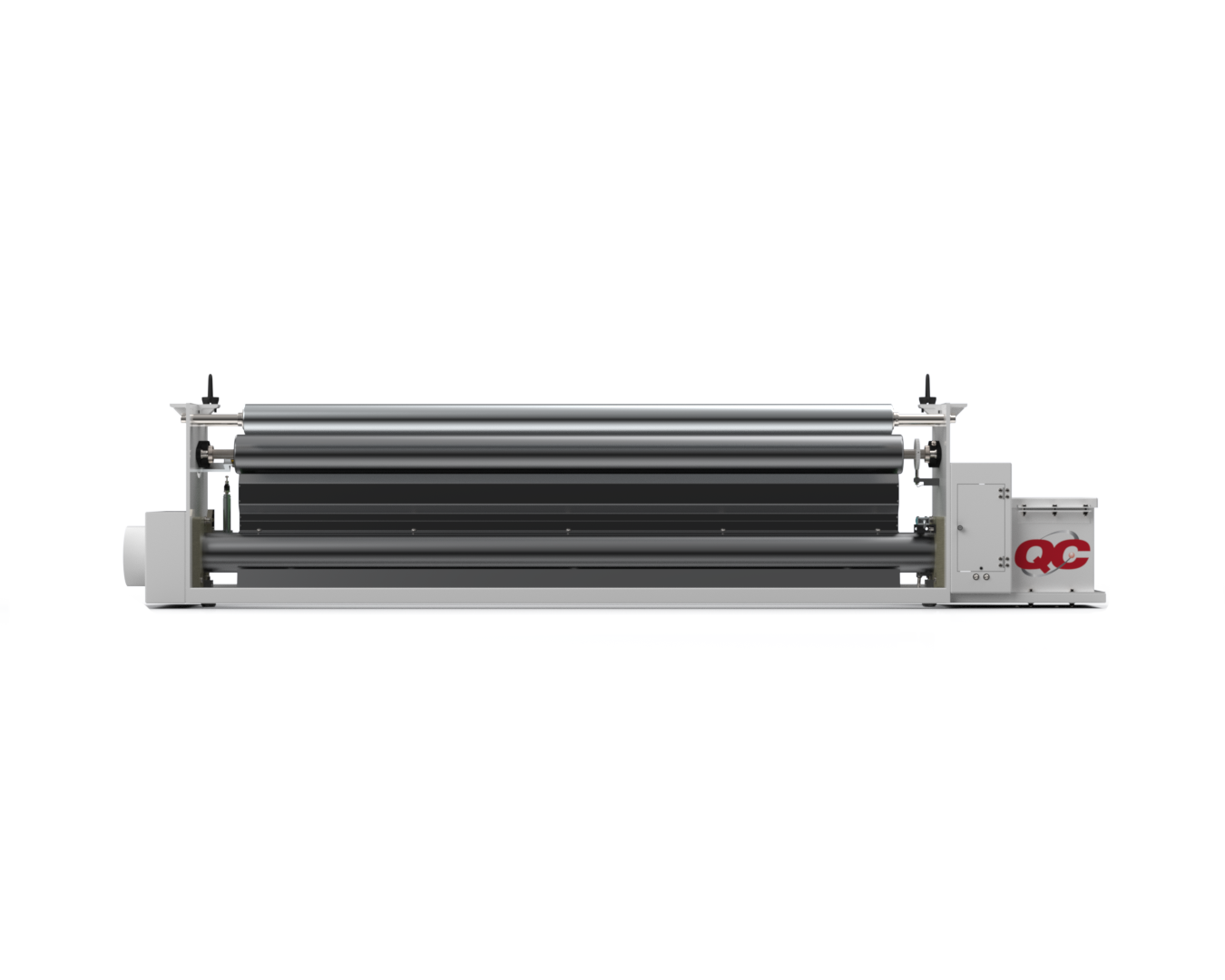
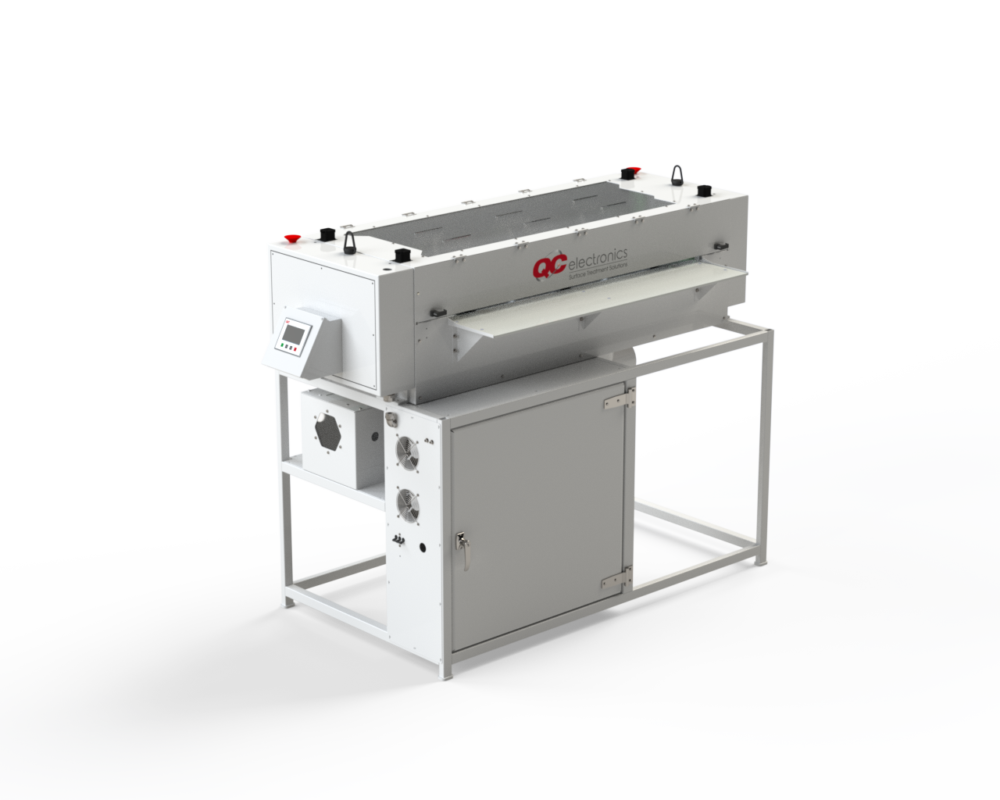
narrow web printing press for corona treatment
Home / Applications / Printing & Labeling
PRINTING & LABELING

Corona Treatment for Printing and Labeling Applications

Ink adhesion failures on film substrates cost printers thousands in rejected product, reprints, and downtime. QC Electronics corona treaters deliver the consistent surface energy your press demands. For flexographic, rotogravure, and digital printing.

Get a Quote → Talk to an Engineer
THE CHALLENGE

Why Printing Requires Corona Treatment

Most polymer films—PE, PP, PET, BOPP—have low surface energy straight off the roll. Untreated polyethylene sits at just 31 dynes/cm. Untreated polypropylene at 29. Meanwhile, water-based flexo inks have surface tensions between 28 and 45 dynes/cm, and at press speeds, the dynamic surface tension climbs even higher.
 
For proper wetting, the surface energy of your substrate must exceed the surface tension of your ink by 8-10 dynes/cm. Without corona treatment, most films fall well below this threshold. And because dynamic surface tension at press speed can be 8-10 dynes/cm higher than the lab value, the gap is even wider than most printers realize.
 
The result: ink beads instead of spreading, adhesion fails under tape test and print defects compound through the rest of your converting process. Higher treatment levels also improve ink flow-out and drying speed. Research has shown press speed can increase 50-200 fpm from proper in-line corona treatment alone.
Common Substrate Surface Energy — Untreated (dynes/cm at 25°C)
Substrate
Untreated Surface Energy
Polyethylene
31
Polypropylene
29
Polyester (PET)
43
Metallized Paper
32-50+
Target treatment level depends on your ink. The substrate surface energy must exceed the dynamic surface tension of your ink by 8-10 dynes/cm. QC Electronics sizes every system to your specific ink chemistry, substrate, and line speed.

THE SOLUTION

Precision Surface Energy Control

QC corona treaters raise the surface energy of your substrate to the exact level your ink chemistry requires. Our systems are sized to your specific ink type, substrate, and equipment: not a one-size-fits-all configuration.

Water-based inks: static surface tension of 28-45 dynes/cm, the highest of the three. At press speeds, dynamic surface tension climbs even higher as water and co-solvents evaporate during the wetting phase, making in-line corona treatment critical
UV-curable inks: static surface tension of 30-35 dynes/cm, but dynamic surface tension at press speeds can reach 45-55 dynes/cm. No solvent evaporation means the ink cures in place, so initial wet-out from corona treatment determines final adhesion
Solvent-based inks: static surface tension around 23 dynes/cm, the lowest of the three ink types. Solvents naturally dissolve slip agents on film surfaces, but consistent corona treatment still improves wet-out, drying speed, and ink anchorage
Why Dynamic Surface Tension Matters

Ink surface tension isn’t a fixed number: it changes with speed. Static surface tension is measured when ink is at rest and surfactant molecules have fully oriented at the surface. This is the lab number you’ll see on a technical data sheet.

Dynamic surface tension is what happens at press speed. Research shows that at surface ages below 100 milliseconds—the timeframe relevant to high-speed printing—ink surface tension can be 8-10 dynes/cm higher than the equilibrium value. An ink that tests at 33 dynes/cm at rest may behave like a 42 dynes/cm ink on your press.

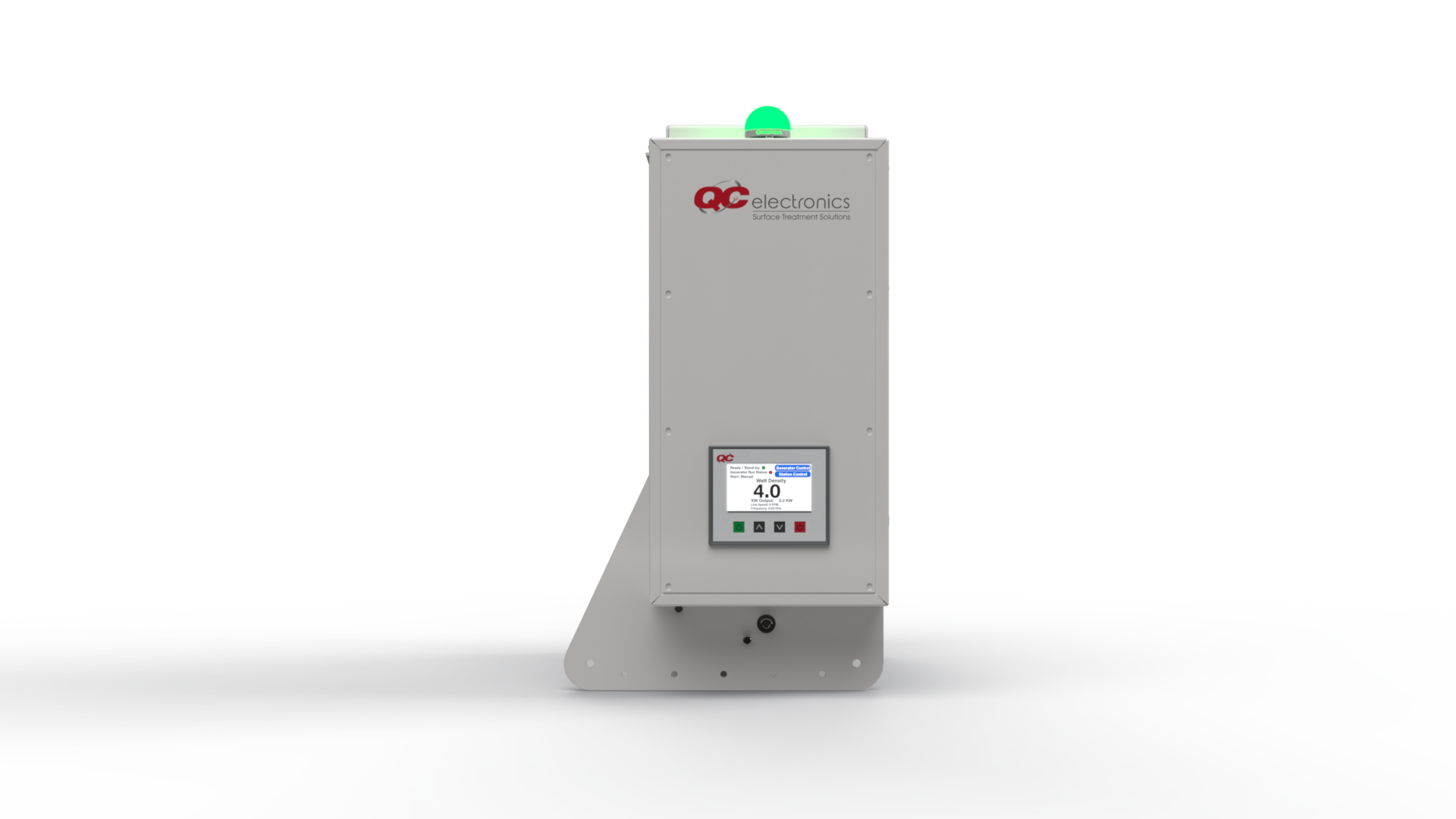
The faster your press runs, the higher the effective surface tension of your ink, and the more critical consistent corona treatment becomes. This is why QC treaters use automatic watt density control to maintain treatment levels regardless of line speed changes. This ensures your substrate’s surface energy always exceeds the dynamic surface tension of your ink.

RESULTS

What Corona Treatment Delivers for Printers

Improved Ink Wet-Out

Ink spreads evenly across the substrate surface instead of beading or pulling back, delivering consistent color density and sharp print quality.

Stronger Ink Anchorage

Ink bonds permanently to the treated surface. No rubbing off, no flaking, no delamination, even under demanding post-print converting processes.

Increased Press Speed

Higher substrate surface energy improves ink flow-out and reduces drying time. In-line corona treatment has been shown to increase commercial press speeds by 50-200 fpm on non-porous substrates.

Reduced Waste

Eliminate reprints and rejected product caused by adhesion failures. Consistent treatment means consistent output—run after run.

OUR PROCESS

From Your Application to a Working Solution

01

Application Review

We gather details about your substrate, ink type, line speed, treat width, and production environment.

02

Lab Testing

Ship us your substrate. We run it through our treaters and measure dyne levels to determine optimal treatment parameters.

03

System Design

Our engineers configure a corona treater matched to your exact specs: application, substrate, treat width, power density, and mechanical integration.

04

Install & Support

Every system ships after a week-long QA test under load. We support installation and provide ongoing technical assistance.

EXPLORE OTHER APPLICATIONS

Coating & Laminating

High-speed adhesive and extrusion coating.

Blown & Cast Film

Inline treatment at the extrusion line.

Narrow Web

Tag and label presses.

Research & Development

Lab-scale testing and validation.

Specialty & Custom

Unique substrates and applications.

GET STARTED

Ready to Solve Your Ink Adhesion Challenges?

Tell us about your printing process, substrate, and ink type. Our engineers will recommend the right corona treatment system and provide a detailed quote.

Request a Custom Quote →