
What is Corona Treatment? A Complete Guide for Adhesion in Flexible Packaging
What is corona treatment, and why does it matter in packaging and plastics?
Author: Alyxandria Klein | Published: May 28, 2025
We will cover the following topics in this article:
What Is Corona Treatment?
Corona treatment is a common process found in nearly every corner of the packaging industry. If there are polymers, inks, or coatings, there is likely a corona treater, too. The purpose of corona treatment is to raise the surface energy of a substrate to render it more accepting of inks, coatings, and other bonding processes. When done right, corona treatment can create a permanent bond, helping extend longevity of labels and other printed products, coatings, and more. The process also assists inks in wetting the surface and can even render a more vibrant print due to the ink pairing with a surface that is perfectly suited for the ink. Corona treatment has also been implemented for its cleaning properties. Many, many materials can be corona treated – it is a common misconception that only polymers are corona treated.
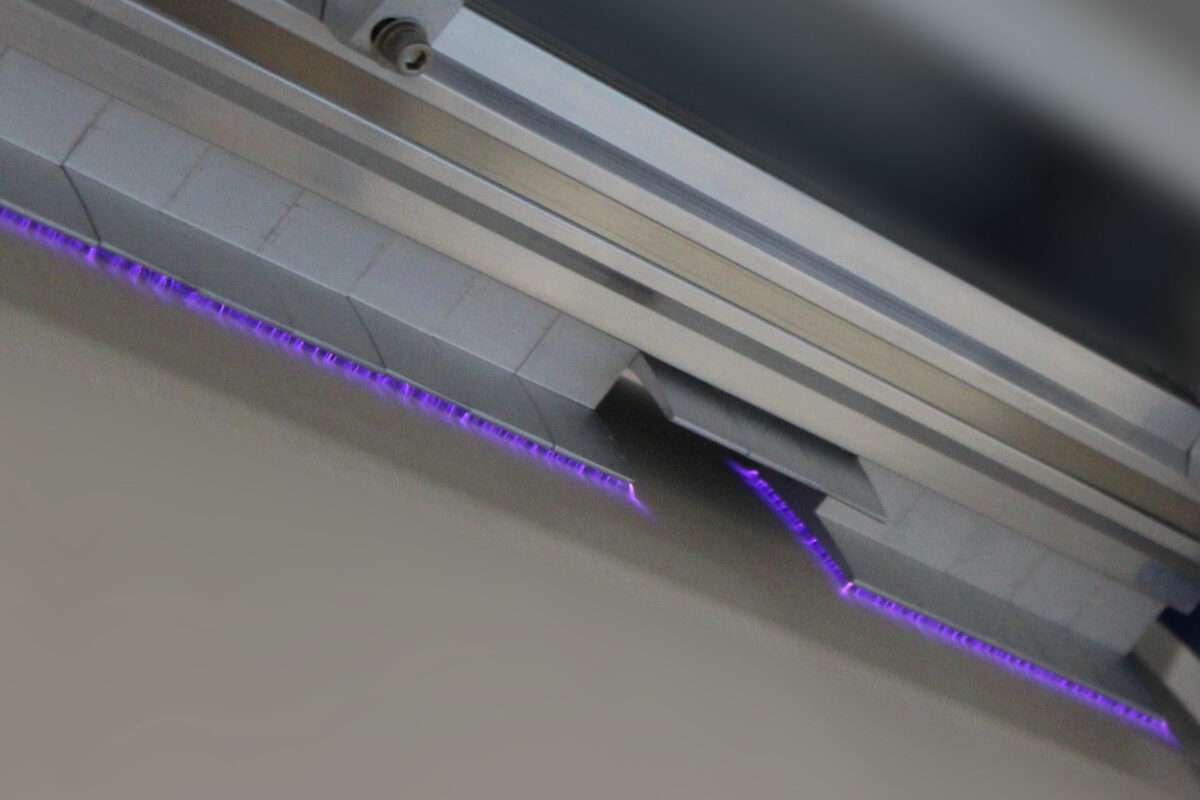
Corona treatment uses an ionized field of air called “corona discharge” to excite the surface molecules of the substrate being fed through the corona field. The corona discharge introduces polar functional groups to the surface. Some configurations can add more polar functional groups than others, while some configurations can also minimize rate of decay of corona treatment. We will get into the different kinds of corona treater configurations next.
How Do Corona Treaters Work?
Types of Corona Treaters
There are two common types of corona treaters. A covered roll corona treater features covered ground roll paired with aluminum electrode (for blown film and nonconductive substrates), and a bare roll corona treater features a bare ground roll paired with a ceramic electrode. There are more than just these two configurations, but these two are the most common, and cover most standard applications.
Key Components of a Corona Treater
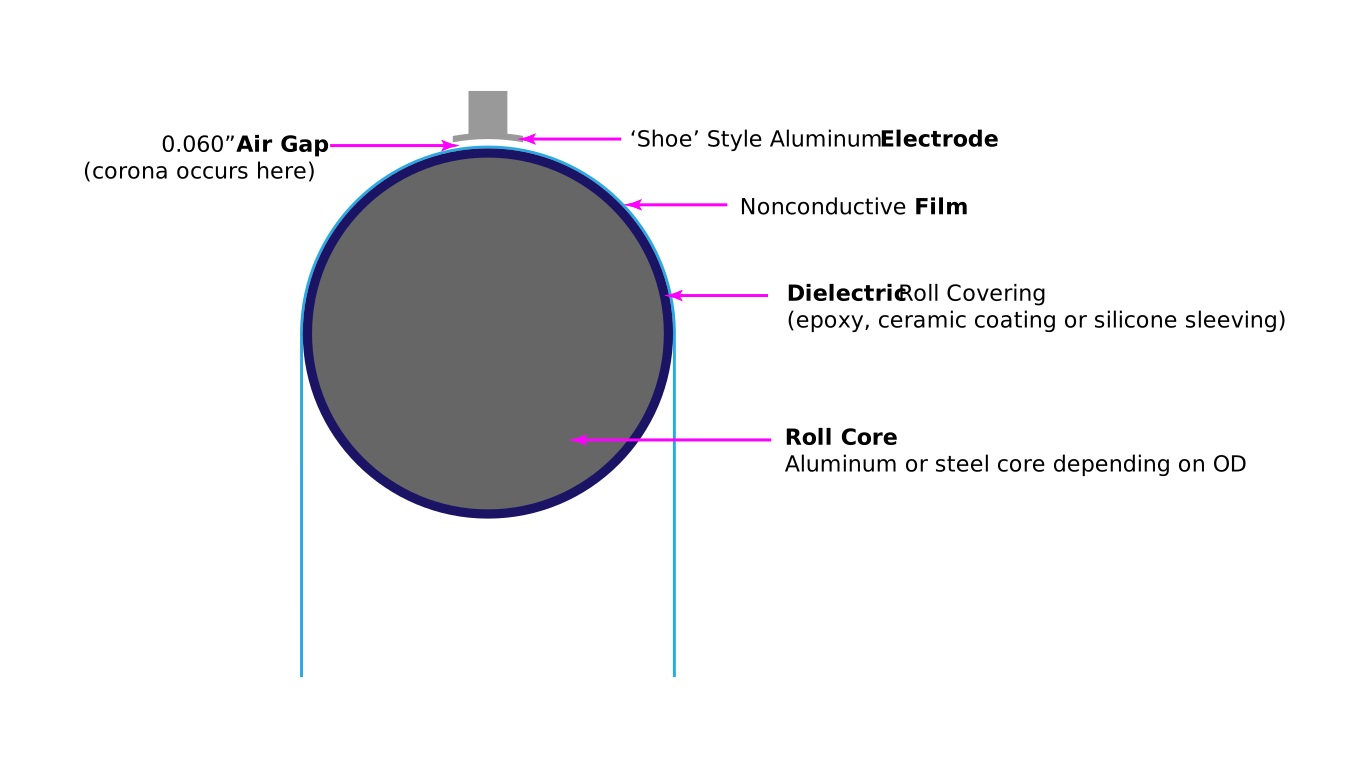
There are four critical elements of a corona treater. First, let’s talk about the high-voltage generator. The high voltage generator’s function is to control the output power to a constant set point when delivering the voltage to the electrode. Next, the electrode (commonly either aluminum or ceramic). The electrode carries the high voltage to the air gap above the ground roll and distributes the electricity across the web. The air gap has been ionized at this point. Working in tandem with the electrode, there must be a grounded surface (almost always the ground roller). In order to create ‘corona’ or ionized air, you need a high voltage potential and a ground potential – this is why we need the grounded roller! Finally, the buffer dielectric. This could be located on the ground roller, or above it (the buffer dielectric could be the electrode as well. The function of the buffer dielectric is to limit the current flow. Below you can see a diagram breaking down the key components of a covered roll corona treater!
Factors Effecting Treatment Efficiency
Several key factors influence the efficiency of corona treatment, directly impacting how well a surface is prepared for adhesion, coating, or printing. The most critical element is watt density – the amount of power applied per unit area of the substrate – but other variables such as the air gap between electrode and substrate, web tension, and web wrap also significantly affect treatment results. Material-specific factors like polymer type, thickness, and the presence of slip agents or additives can either promote or reduce surface activation. Environmental elements such as humidity, dust, or surface oils can interfere with surface energy, making proper material handling and cleanliness vital. Additionally, electrode configuration, ground roll condition, and regular maintenance of the treater system (e.g., keeping electrodes and rollers clean and properly aligned) are essential to maintaining consistent and reliable treatment. Finally, regularly monitoring dyne levels post-treatment helps confirm surface energy has reached the desired level for long-term adhesion performance.
Watt Density
Watt density is the most fundamental factor in corona treatment. It represents the power delivered to the substrate per unit area and is affected by the power output of the treater, the width of the electrode, line speed, and number of treat sides (1 or 2). If watt density is too low, the treatment may be ineffective; too high, and it may compromise the substrate.
Watt Density (W/ft²) = Power (watts) ÷ (Line Speed (ft/min) × Web Width (ft) × (1 or 2))
👉 Check out our watt density calculator to see how your line parameters affect power applied to the substrate.
Web Tension and Wrap
It is critical that the substrate lays flat against the grounded roll to ensure proper exposure to the corona discharge. If the web lifts or shifts, it can lead to back side treatment (where the back side of the web is unintentionally exposed to the corona). This not only wastes energy but also reduces the effectiveness of treatment on the intended surface. Uneven contact with the ground roll can result in inconsistent dyne levels, leading to adhesion or printing issues.
Type of Material
Not all materials are created equal. Every substrate has its own baseline surface energy and behaves differently when exposed to corona treatment. For example, polypropylene (PP) typically requires more aggressive treatment than PET. Additionally, the ink, adhesive, or coating being applied also has specific surface energy requirements of the substrate to bond effectively to it. Ensuring compatibility between substrate, treatment level, and application chemistry is crucial for achieving strong and durable bonds.
Thickness of Material and Air Gap
Thicker materials require more voltage to treat effectively because they increase the air gap (the distance between the electrode and the ground roll). A larger air gap means the corona discharge must ionize more air initially. Fine-tuning the air gap is also important – for the most efficient treatment, you want your air gap to be adjusted for your specific material thickness. If the air gap is too high, you risk energy loss and a weak corona discharge. If the air gap is too low, you may risk over-treatment, or the substrate coming into contact with the electrode. In most applications, the air gap is set at 0.060″. With this air gap, you can run thicknesses ranging from 0.0005″ to 0.055″. Thicker materials ranging from 0.060″ to 0.250″ require an air gap 0.015″ larger than the thickness of the material.
Enhancing Plastic Adhesion
Challenges in Plastic Adhesion
Let’s talk about plastics. Plastics or polymers (e.g., PP, PE, PET) have inherently low surface energies. In other words, they cannot be bonded to easily. Think about a plastic bag that you try to write on with a Sharpie – the marker smears and it’s probably going to end up on your hand rather than what you’re trying to write on. Well, imagine the plastic behaves more like a piece of paper than a piece of plastic. This is how a substrate acts after corona treatment!
Not just the inherent state of the substrate presents challenges, though. Things like the presence of slip agents or contamination also play a major role in the substrate’s performance. When corona treatment is introduced to substrates with a high amount of slip agents, we can experience a rapid loss of corona treatment results due to the migration of agents within the polymer.
How Corona Treatment Improves Adhesion
Corona treatment introduces polar functional groups to the surface of the material. If you look at the substrate before and after corona treatment under a microscope with a contact angle measurement device, you will notice that the substrate has undergone a rapid change within its surface.
Applications of Corona Treatment in Packaging
Converting
Every flexible film converter needs a corona treater. Whether printing, coating, or laminating (or all three), having corona treaters allows you to outperform competitors and, in the end, secure those contract deals. Corona treatment is a vital step in manufacturing a quality product that turns heads on the shelves.
View our corona treater for converting applications.
Printing and Labeling
Corona treatment optimizes ink performance. Corona treaters are used in various printing processes to improve the adhesion and longevity of prints. Corona treatment can also increase the dot grain of the print to allow for more vivid and accurate coloration. Corona treating your films prior to printing helps you offer a product that is better than the converter down the road. In labeling, we can achieve labels that meet strict regulations, avoiding rub off with strong bonds.
Laminating
Corona treaters play a key role in laminating applications by improving adhesion at multiple stages. You can corona treat the base film to ensure strong bonding between layers, and you can also treat the top layer to enhance printability later in the process. If your production involves both laminating and printing, you’re likely using two corona treaters, each serving a different purpose! Since corona treatment universally enhances adhesion, it fits into many parts of the converting process, ensuring better product quality and more reliable performance throughout production.
Coating
In coating applications, corona treaters ensure proper adhesion between the substrate and the applied coating, allowing the coating to spread evenly and bond effectively. Without corona treatment, coatings may bead up, delaminate, or fail to adhere properly.
Blown and Cast Film Extrusion
Blown film extruders install corona treaters in preparation for converting processes downstream, or to offer their converter customers with corona treated product. The same goes for cast film!
View our corona treater for blown and cast film.

Solving the Problem of Adhesion
Common Adhesion Problems
Adhesion problems are often caused by low surface energy, contamination, or incompatible materials. When a substrate has low surface energy, inks, adhesives, and coatings struggle to wet out and bond properly, leading to issues like peeling, delamination, or smudging. Corona treatment solves this by increasing the surface energy of materials like polyethylene, polypropylene, and other films, making them more receptive to adhesion. It also removes light surface contamination, such as oils or additives, that can interfere with bonding. By properly setting corona treatment levels for each material and application, you can significantly reduce adhesion failures and ensure consistent, high-quality results. Corona treatment doesn’t just solve this problem on plastics – we also see corona treatment being used to combat these problems in other types of materials like foam, paper, and metal!
Issue 1: Adhesion Failure or Peeling
If ink or adhesive isn’t sticking or is peeling off, it’s often due to low surface energy or contamination on the substrate. Many plastic films, like polyethylene (PE) and polypropylene (PP), have naturally low surface energy, making it difficult for inks and adhesives to bond. Corona treatment increases surface energy, improving wettability so that inks and adhesives spread evenly and adhere properly. If peeling or poor adhesion persists, checking dyne levels and ensuring the substrate is treated to the correct level for your specific ink or adhesive can help resolve the issue.
Issue 2: Poor Print Quality or Delamination
Poor print quality or delamination is often caused by insufficient surface energy, preventing inks, coatings, or laminating adhesives from properly bonding to the substrate. If the surface isn’t adequately treated, inks may appear streaky, mottled, or smudged, while laminated layers can separate over time. Corona treatment helps by increasing surface energy, ensuring even ink distribution and strong adhesion between layers. It also removes minor contaminants that could interfere with bonding. To prevent these issues, it’s essential to monitor dyne levels and ensure consistent corona treatment for optimal adhesion and long-term durability in printing and lamination processes.
Have you realized a common denominator in these core issues? It’s surface energy! When we understand surface energy, we understand how to get a great bond, and a great print.
Issue 3: Variability in Adhesion Performance
Variability in adhesion performance is often a sign of inconsistent corona treatment, fluctuating dyne levels, or changes in material properties. Factors like uneven treatment across the web, changes in film additives, or aging of treated surfaces can lead to adhesion issues that vary from batch to batch. If surface energy isn’t uniform, inks, adhesives, or coatings may bond well in some areas but fail in others, causing print defects, peeling, or delamination. Regularly checking dyne levels, maintaining corona treater electrodes, and ensuring consistent treatment settings can help stabilize adhesion performance. Additionally, treating films just before converting processes helps maintain optimal surface energy for reliable bonding.
Diagnosis and Troubleshooting
Measuring Surface Energy
Measuring surface energy is essential for ensuring proper adhesion, and this can be done using dyne solutions or contact angle analysis. The ASTM D2578 drawdown method is a widely used technique where dyne solutions of known surface tension are applied to the substrate with a cotton swab or applicator pen. The highest dyne level that remains wetted out for at least two seconds indicates the material’s surface energy. Alternatively, contact angle analysis measures the angle formed by a liquid droplet on the surface – lower angles indicate higher surface energy and better wettability. Both methods help assess the effectiveness of corona treatment and ensure surfaces are optimized for adhesion.
Identifying Contamination Sources
Identifying contamination sources is crucial when adhesion issues arise, as oils, additives, and processing residues can interfere with bonding. Slip agents and additives can migrate to the surface over time and reduce surface energy. Oils from manufacturing equipment or handling can also create adhesion problems. If dyne testing shows inconsistent or unexpectedly low surface energy, contamination may be the cause. In many cases, corona treatment can break down light contamination, but for heavy contamination, these contaminants must be mitigated prior to corona treatment.
Optimizing Corona Treater Performance
Adjusting Power Levels
Adjusting corona treater power levels is key to optimizing surface treatment for different materials and applications. Too little power may result in insufficient surface energy, leading to poor adhesion, while excessive power can degrade the substrate, causing over-treatment, pinholes, or brittleness. The optimal power level is determined by watt density, calculated based on web speed, electrode width, and power (kilowatts delivered to the discharge field). A good starting point is adjusting the power to achieve the required dyne level for the specific ink, adhesive, or coating being used. Regular monitoring of dyne levels and making incremental power adjustments ensures consistent treatment without damaging the material. Balancing power with material type and processing speed is essential for maintaining adhesion quality and product durability.
Electrode Positioning
Proper electrode positioning is crucial for achieving uniform corona treatment and optimizing adhesion performance. Electrodes should be aligned to ensure even discharge across the web, preventing under-treatment or over-treatment in certain areas. If electrodes are too far from the substrate, the treatment may be weak and ineffective, leading to poor adhesion. Conversely, if they are too close, arcing or uneven treatment can occur, potentially damaging the material. Adjusting the electrode gap according to manufacturer specifications and ensuring even pressure distribution helps maintain consistent treatment. Regular inspections and realignment can prevent issues like streaking or variability in dyne levels, ensuring reliable surface activation for printing, coating, or laminating processes.
Ensuring Consistent Web Speed and Tension
Ensuring consistent web speed and tension is critical for achieving uniform corona treatment and maintaining adhesion quality. If web speed fluctuates, the exposure time to the corona discharge changes, leading to uneven surface treatment. Proper tension control is equally important, as slack areas may receive inconsistent treatment, causing variability in dyne levels across the web. The corona discharge will treat the back side of the material if the material lifts while in the field. Maintaining steady speed and tension ensures that the substrate moves smoothly through the corona treater, allowing for even energy distribution. By monitoring and adjusting these factors, manufacturers can achieve reliable adhesion performance for printing, coating, and laminating applications.
Proper Web Wrap
Maintaining proper web wrap is equally as important. Proper web wrap is essential for maximizing the effectiveness of corona treatment and ensuring uniform surface activation. The way the web contacts the treater roll directly affects treatment consistency. Ideally, the web should have sufficient wrap to maintain full and stable contact with the treater roll, preventing air gaps that can cause backside treatment and uneven treatment on the targeted side. Proper web wrap also helps control tension and prevents wrinkling, ensuring smooth and consistent surface modification.
Avoiding Over-Treatment
Yes, it is possible to over-treat materials! This occurs when the watt density is too high for the specific application, leading to surface degradation rather than improved adhesion. Every material and process require a carefully controlled watt density to reach the optimal surface energy for bonding. Over-treatment can cause brittleness, excessive oxidation, or even cause adhesion processes to fail completely. To avoid this, consult your corona treater manufacturer for best practices or send in material samples for testing. They can determine the precise watt density needed for a successful bond, eliminating guesswork and ensuring consistent, high-quality adhesion in your process.
Cleaning Schedule
Incorporate a routine cleaning schedule to ensure the corona treater remains at optimal performance. Over time, dust and residues can build up on electrodes and rollers, reducing treatment efficiency and causing uneven dyne levels. Regularly inspecting and cleaning components – especially the electrode, ground roll, and any ceramic parts – helps prevent downtime, ensures uniform discharge, and extends the life of the equipment. A simple, scheduled cleaning routine can significantly improve treatment consistency and product quality.
Measuring Surface Energy
Understanding Surface Energy and Dyne Levels
Surface energy determines how well a liquid (ink, adhesive, or coating) spreads and bonds to a material, and dyne testing measures this energy to ensure proper treatment. The ASTM D2578 method specifically covers measuring the wetting tension of polyethylene and polypropylene films using test solutions in the presence of air. Since this method is designed for specific materials, it’s important to ensure the material’s compatibility with your intended test method when evaluating surface energy.

For more precise readings and lab environments, contact angle measurement devices are gaining popularity. In our lab, we use KRÜSS’s mobile surface analyzer. The KRÜSS MSA uses contact angle measurements with test liquids (in our case, water and diiodomethane) to calculate surface energy based on the Owens-Wendt or similar models. This method provides a breakdown of polar and dispersive components, giving a much more detailed surface profile than traditional dyne solutions.
Measuring surface energy in the lab before going on-line helps:
- Predict adhesion performance for inks, coatings, and adhesives
- Select appropriate corona treatment levels for specific materials
- Understand how additives (e.g., slip agents) affect surface activation
- Confirm whether materials are responsive to plasma, corona, or flame treatment
While ASTM D2578 remains a standard for quick field testing, using a KRÜSS analyzer offers greater precision and is ideal for pre-treatment development, material qualification, and process optimization. It ensures materials are properly characterized before full-scale converting begins.
KRÜSS official site
Long Term Stability of Treatment
One of the key challenges of corona treatment is the gradual decline in surface energy over time, a phenomenon known as aging or hydrophobic recovery. This occurs when treated materials slowly revert to their original low-energy state, reducing their ability to maintain strong adhesion. Several factors contribute to this effect, including the reorientation of polar groups, migration of low-molecular-weight additives, and contamination from airborne particles if surfaces are not properly stored.
The rate and extent of aging vary depending on the treatment method and material type. Corona treatment ionizes ambient air, which generates atomic oxygen and ozone, which causes chain scission (breaking of molecular chains) and leads to the formation of low-molecular-weight oxidized materials (LMWOM). When these oxidation byproducts are exposed to physical handling, moisture, or washing, this can reduce the effectiveness of corona treatment. This is why corona treatment is typically found on-line directly before the adhesion process.
Ultimately, the rate of surface aging is influenced by storage conditions, temperature, humidity, and material composition. To minimize aging effects, proper storage conditions and optimized blends/treatment parameters should be considered in industrial applications.
Conclusion
Corona treatment is an indispensable technology in the world of surface engineering, especially within the packaging, printing, and converting industries. As we’ve explored throughout this article, its ability to elevate surface energy and enhance adhesion makes it foundational to achieving high-quality, durable bonds between substrates and inks, adhesives, or coatings. From solving common adhesion failures to improving the printability of challenging polymers, corona treatment offers a scalable, cost-effective solution that integrates seamlessly with modern production lines.
However, maximizing its effectiveness depends on a deep understanding of variables such as watt density, web tension, air gap, and material composition. Just as critical is the ongoing diagnosis and troubleshooting of system performance using tools like dyne testing and contact angle analysis. Missteps like over-treatment, insufficient power, or contamination can compromise product integrity and production efficiency.
For converters, printers, and extruders alike, mastering corona treatment means mastering adhesion. It’s not just about turning on a treater – it’s about optimizing parameters, understanding the behavior of different materials, and maintaining equipment with precision. And while corona treatment isn’t the only surface activation method available, it remains one of the most widely adopted and reliable solutions across industries.
Ultimately, by applying the principles and practices outlined in this article, manufacturers can confidently produce materials that meet performance standards, withstand downstream processing, and deliver lasting adhesion – ensuring success on the shelf and in the supply chain.
Want the latest innovations and insights from the experts? Follow QC Electronics on LinkedIn and stay ahead of the curve.