Corona Treatment for Blown Film, Cast Film, and Extrusion Coating
Film that leaves your line without adequate surface energy creates adhesion problems downstream for your customers and for your own converting operations. QC Electronics corona treaters deliver consistent, measurable dyne levels at the extrusion line so every roll ships ready to print, coat, or laminate.
Get a Quote → Talk to an EngineerWhy Extrusion Lines Need Corona Treatment
Treatment Matched to Your Extrusion Process
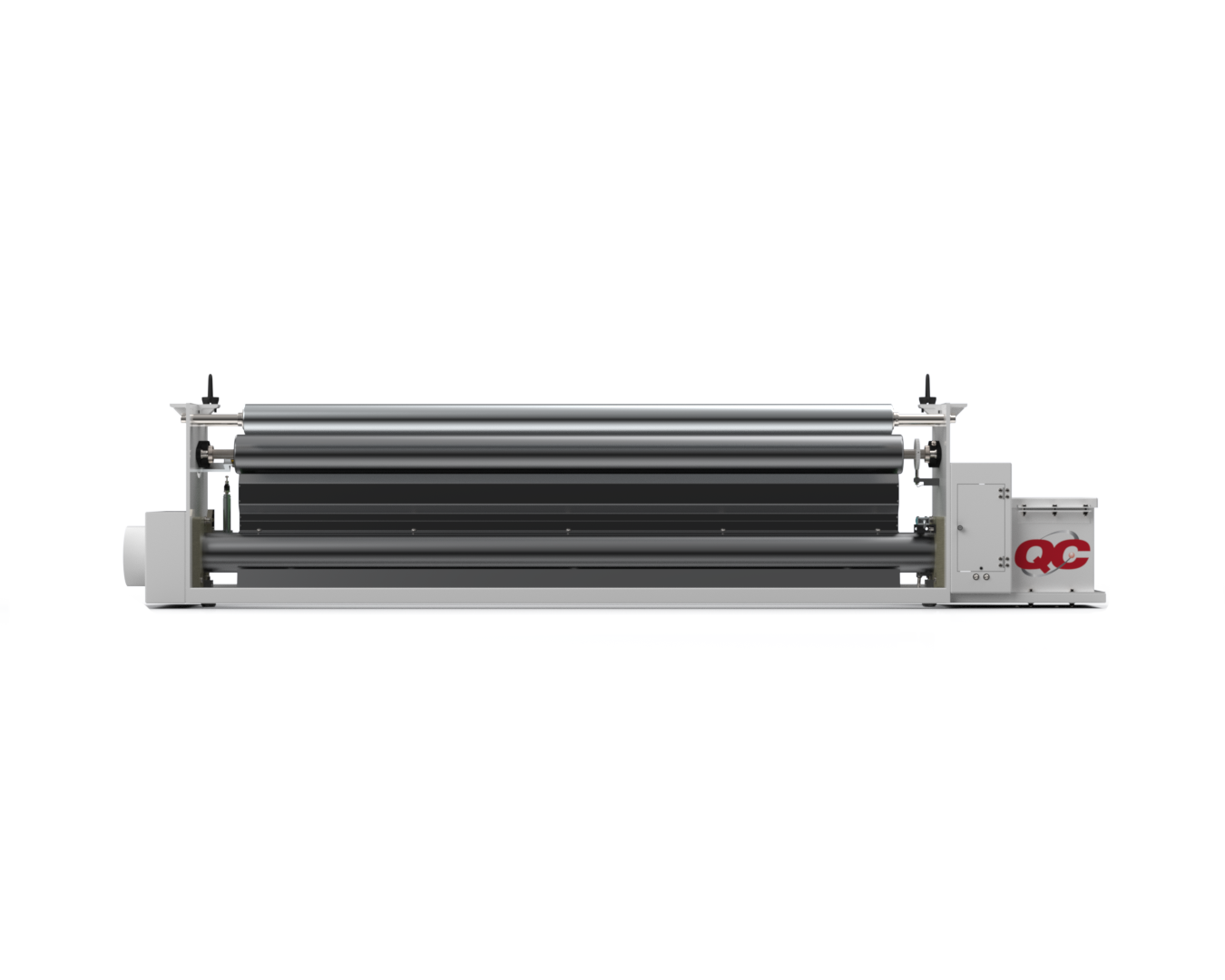
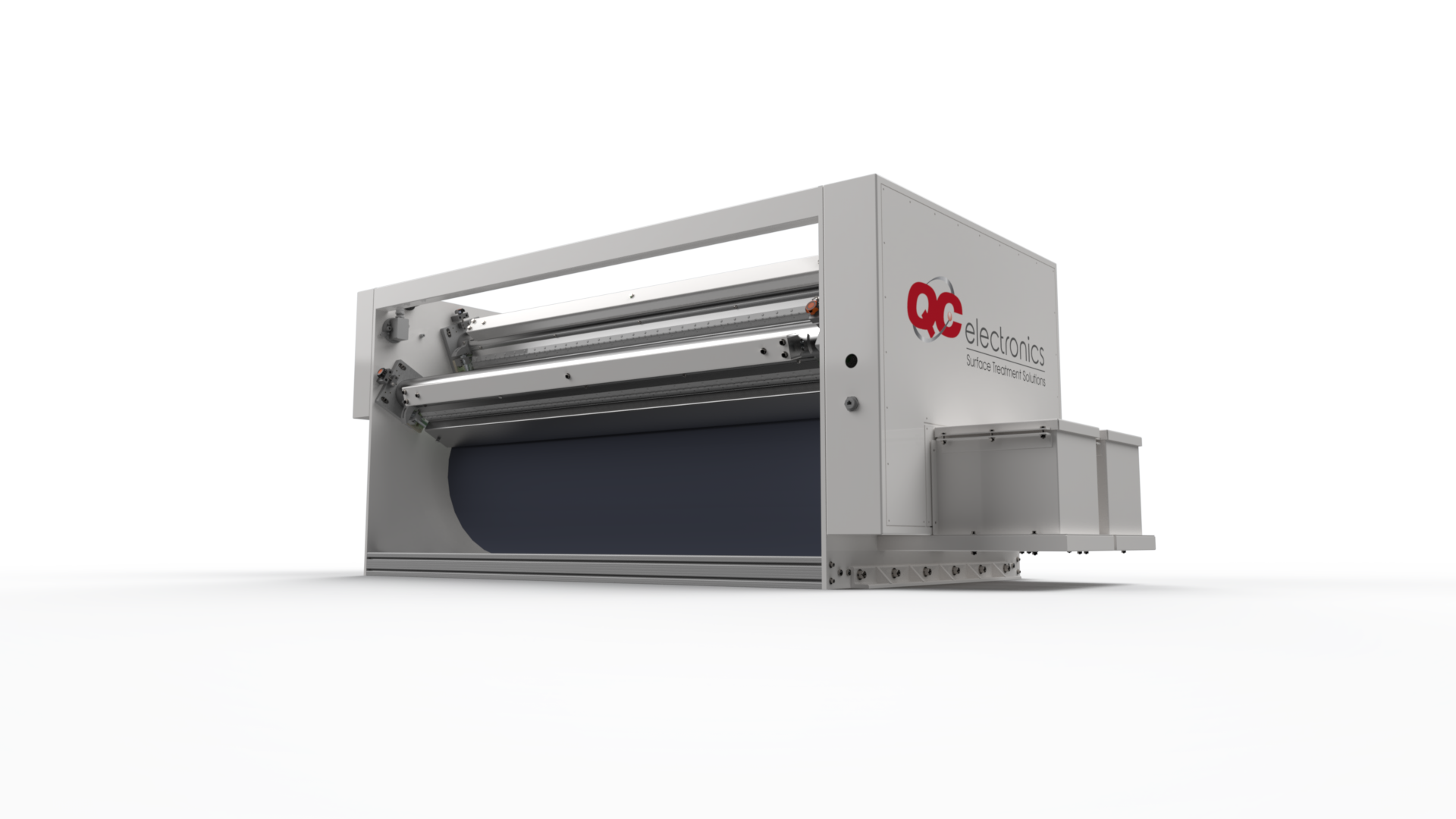
QC corona treaters are engineered specifically for the demands of extrusion environments—high temperatures, continuous 24/7 operation, and wide treat widths up to 5 meters. We size the system to your polymer type, line speed, and your own or your customers’ downstream requirements.
Freshly extruded polymer is at its most receptive to corona treatment: the chains are still mobile and accept surface modification more readily. Treatment at this stage requires less power to achieve higher dyne levels than re-treating aged film. In fact, certain films like polypropylene and polyester may never be receptive to corona treatment if they aren’t treated at the point of extrusion.
However, treatment is not permanent. Slip additives migrate to the surface, humidity accelerates decay, and dyne levels will diminish over time regardless of when treatment was applied. Industry experts note that freshly treated film consistently provides better adhesion than aged film at equivalent dyne levels, even when the numbers match on a dyne pen test.
For operations that convert in-house, in-line treatment immediately before the print or laminating station eliminates the decay variable entirely. For extruders selling pretreated film, treating at the extrusion line gives your customers the highest possible starting dyne level and the widest downstream processing window.
Corona Treaters for Film Extrusion
Built for the demands of 24/7 extrusion environments: high temperatures, continuous duty, and treat widths up to 5 meters. Every system is configured to your specific polymer, line speed, and downstream application requirements.
What Corona Treatment Delivers for Film Extruders
Consistent Dyne Levels
Deliver film with predictable, measurable surface energy roll after roll. Eliminate customer complaints about treatment variation that leads to adhesion failures downstream.
Heat Management
QC’s patented TNT design minimizes heat transfer to temperature-sensitive films. Airflow and station geometry keep dielectric consumables cool for extended service life in continuous 24/7 operation.
Downstream Adhesion
Film treated at the extrusion line gives your customers the surface energy they need for printing, coating, and laminating, reducing rejects and returns caused by inadequate treatment.
Extended Treatment Life
Treating freshly extruded polymer produces higher initial dyne levels and slower treatment decay compared to re-treating aged film. Your customers get a wider processing window.
From Your Application to a Working Solution
Application Review
We gather details about your substrate, ink type, line speed, treat width, and production environment.
Lab Testing
Ship us your substrate. We run it through our treaters and measure dyne levels to determine optimal treatment parameters.
System Design
Our engineers configure a corona treater matched to your exact specs: application, substrate, treat width, power density, and mechanical integration.
Install & Support
Every system ships after a week-long QA test under load. We support installation and provide ongoing technical assistance.
Ready to Deliver Better Film?
Tell us about your extrusion process, polymer type, and your customers’ downstream requirements. Our engineers will recommend the right corona treatment system and provide a detailed quote.
Request a Custom Quote →